
Sea Garden Magic
Maricultural Renewal

On the ferry, I was introduced to an unassuming man who spoke quietly—and persistently—of clams. We were travelling to the opening of an ethnobotanical garden on SḴŦAḴ / Mayne Island. I tried asking about family and life, but ZȺWIZUT / Carl Olsen tenaciously stuck to clam gardens. “Would you help bring Salt Spring children and community to the clam gardens at W̱ENÁ¸NEĆ, at Fulford Harbour,” he asked, “so they can learn to care for this food source?”
I agreed. Before the event, a pair of rainbow-irridescent clamshell earrings jumped out at me at the thrift shop—a good sign!
When I met ZȺWIZUT, I was just emerging from a total mental shutdown following a shattering divorce. Following his request, teacher Alison Bain and I organized school field trips three Junes in a row, guided by Coast Salish Elders and supported by Parks Canada (Gulf Islands National Park Reserve). And, the past two National Indigenous Peoples Weekends featured Clam Garden Community Events. As a botanist with a Masters in fisheries, this project helped me come out of my own clamshell—restoring wonder for the natural world and our place in it.
That first cool, misty morning in June, children and teachers hauled carafes of tea and campfire supplies down to the beach to meet W̱SÁNEĆ Knowledge Carriers, ZȺWIZUT and Mark Sampson, plus the Parks Canada crew at the W̱ENÁ¸NEĆ Sea Gardens at a low, 0.3m tide.
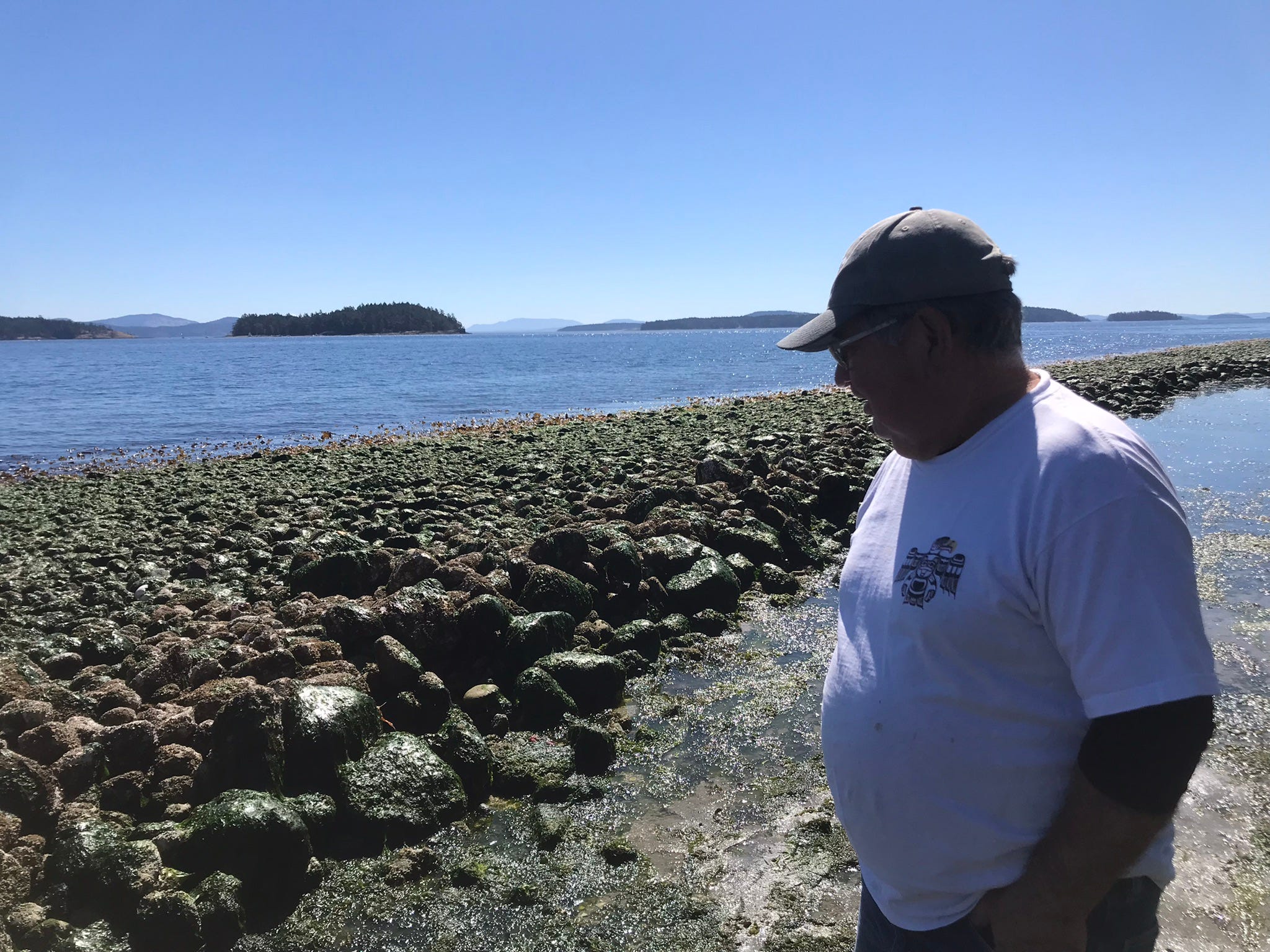
As far as we could see, an elevated stone wall followed the contours of the shoreline beyond the beach. ZȺWIZUT explained that this 800-meter-long, 15-meter-wide elevated rock reef was constructed over 4,000 years ago to create ideal habitat for butter clams and many other tasty species to thrive.
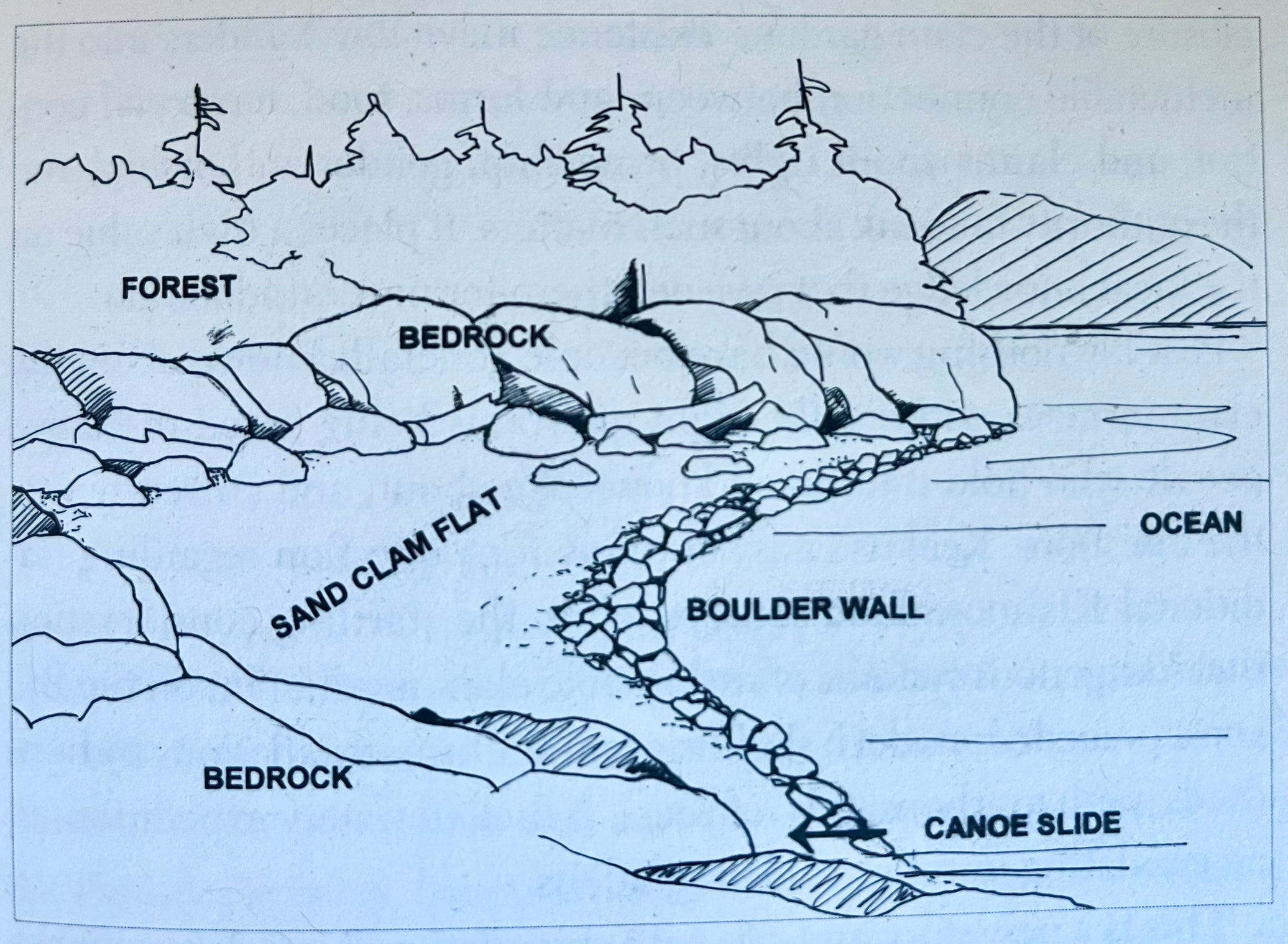
Over 700 clam gardens have been mapped from the San Juans to Alaska; 65 are in the Southern Gulf Islands alone. ZȺWIZUT welcomed us and taught everyone to say “ÍY, SȻÁĆEL” (pronounced “Aye Squaychel”), which means“Good day” in SENČOŦEN. He spoke of the collaborative work between Coast Salish Nations and Parks Canada over the past decade to restore clam gardens, such as this one, throughout the archipelago.
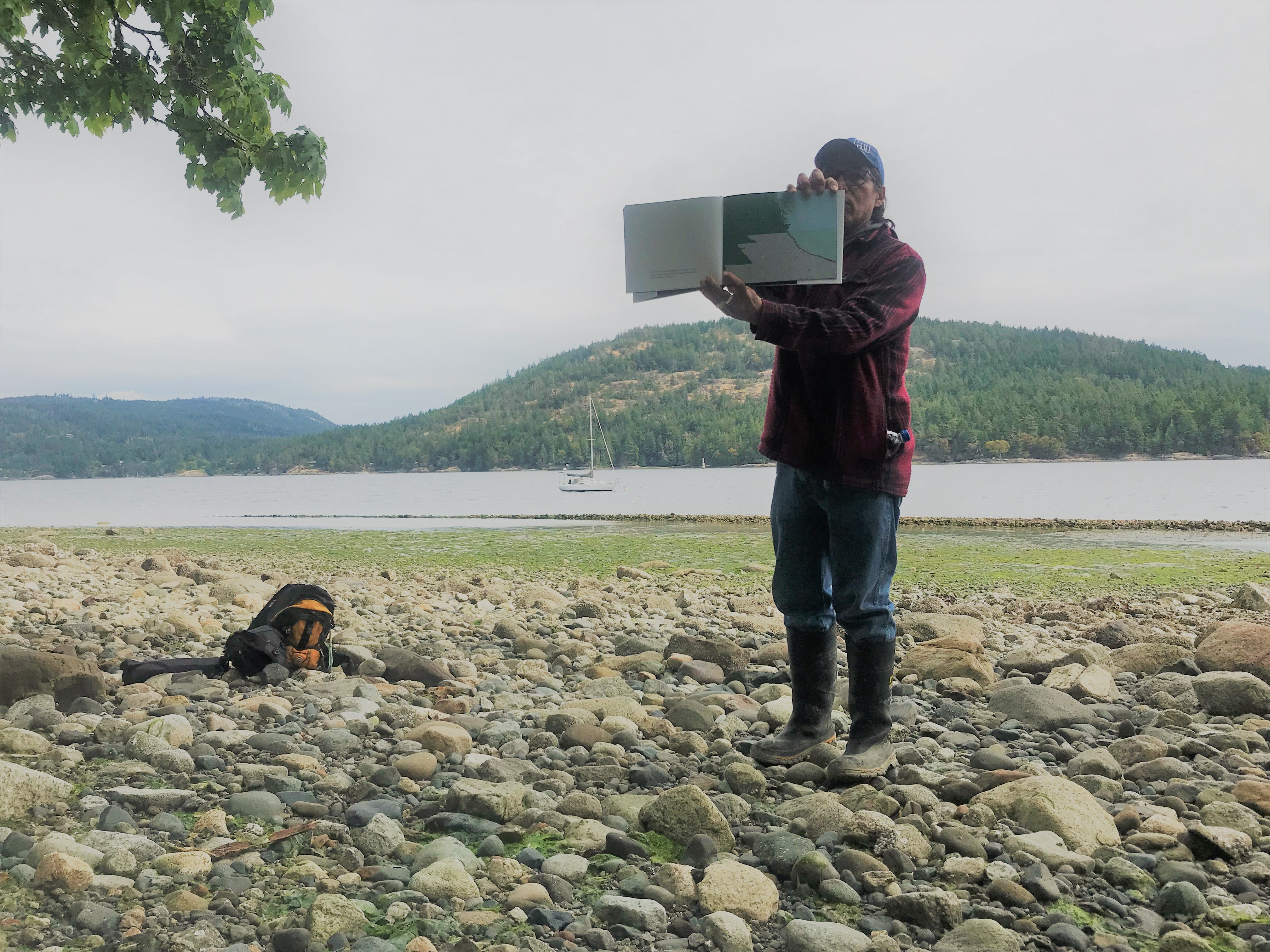
In his slow, deep voice, Mark Sampson read aloud from So you want to visit a Sea Garden?. “Listen closely for the symphony of clams, welcoming us to their beach,” turning to show us bold illustrations that mirrored our surroundings.
“When the tide is out, the table is set,” added ZȺWIZUT, sharing a proverb that speaks to the abundance this food-producing ecosystem.
Erich Kelch from Parks Canada led a photo quiz called “Can You Eat That?”—sea cucumbers (YES!), crabs, seaweeds, urchins, moon snails (NO!), chitons, and of course, many species of clams.


We spotted red rock crabs, purple sea stars, sea cucumbers, and even octopus nesting holes in the wall. Clams squirted all around.
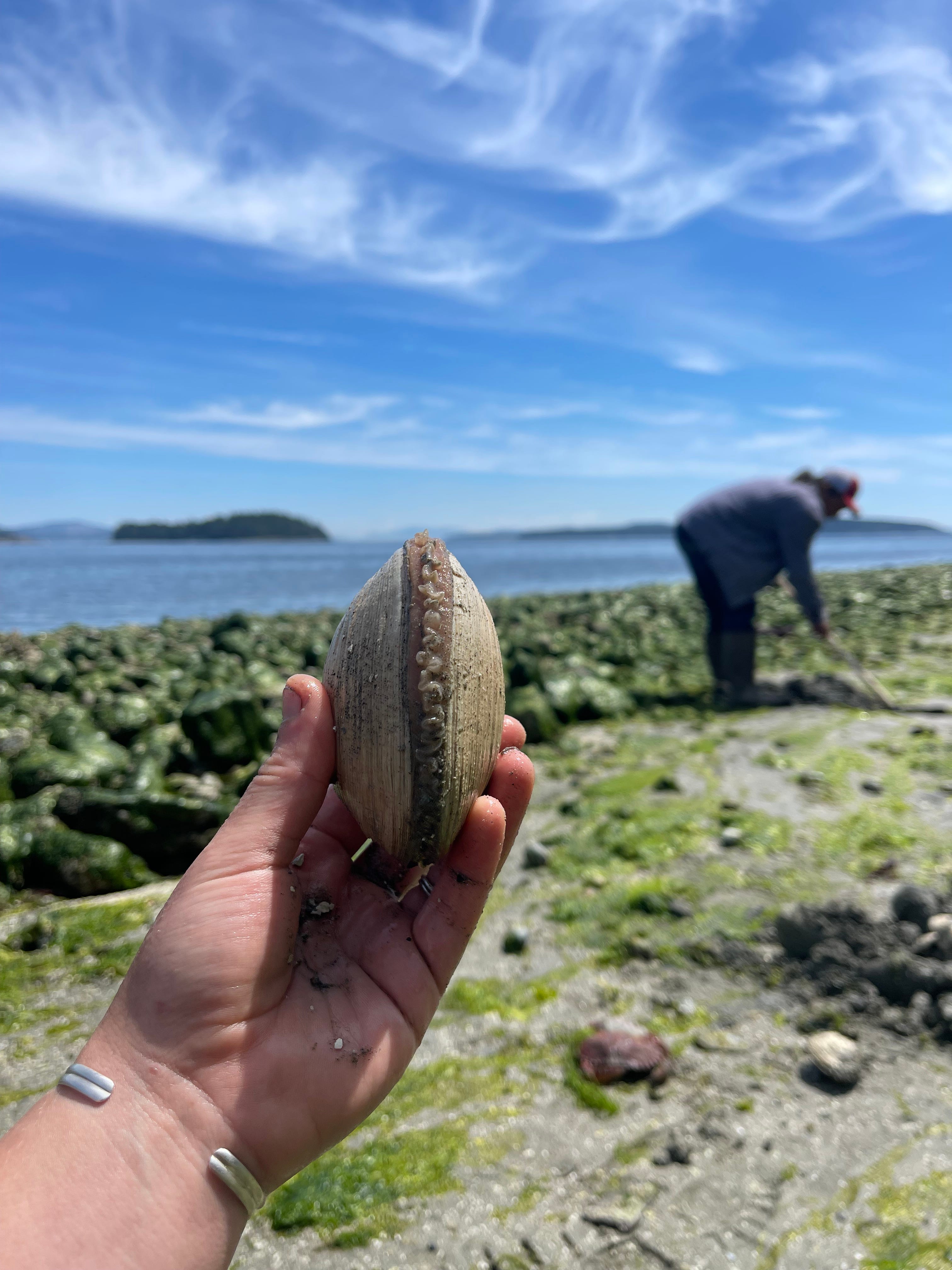
“I found a giant butter clam on my first dig!,” exclaimed a 10-year-old boy, “I was built for digging clams!”


The team steamed a pot-full of richly flavoured, salty butter clams, and nearly all the children dug in. Afterwards, we reburied the empty shells—saying HÍ SW̠ KE / thank you—so their calcarious minerals could support new shellfish and sealife.
The night before, ZȺWIZUT stayed at our house and dined with me and the kids. He’d spent his career as an addiction counselor, and I was struggling with alcoholism in the family. Over coffee, we shared what weighed on our hearts. For months afterwards—both early risers—we exchanged sunrise photos.
Later, Spune’luxutth / Penelakut Elder Ken Thomas and marine ecologist Emily Shaver joined a field trip, providing a perfect example of two-eyed seeing, blending Indigenous knowledge with scientific insight.
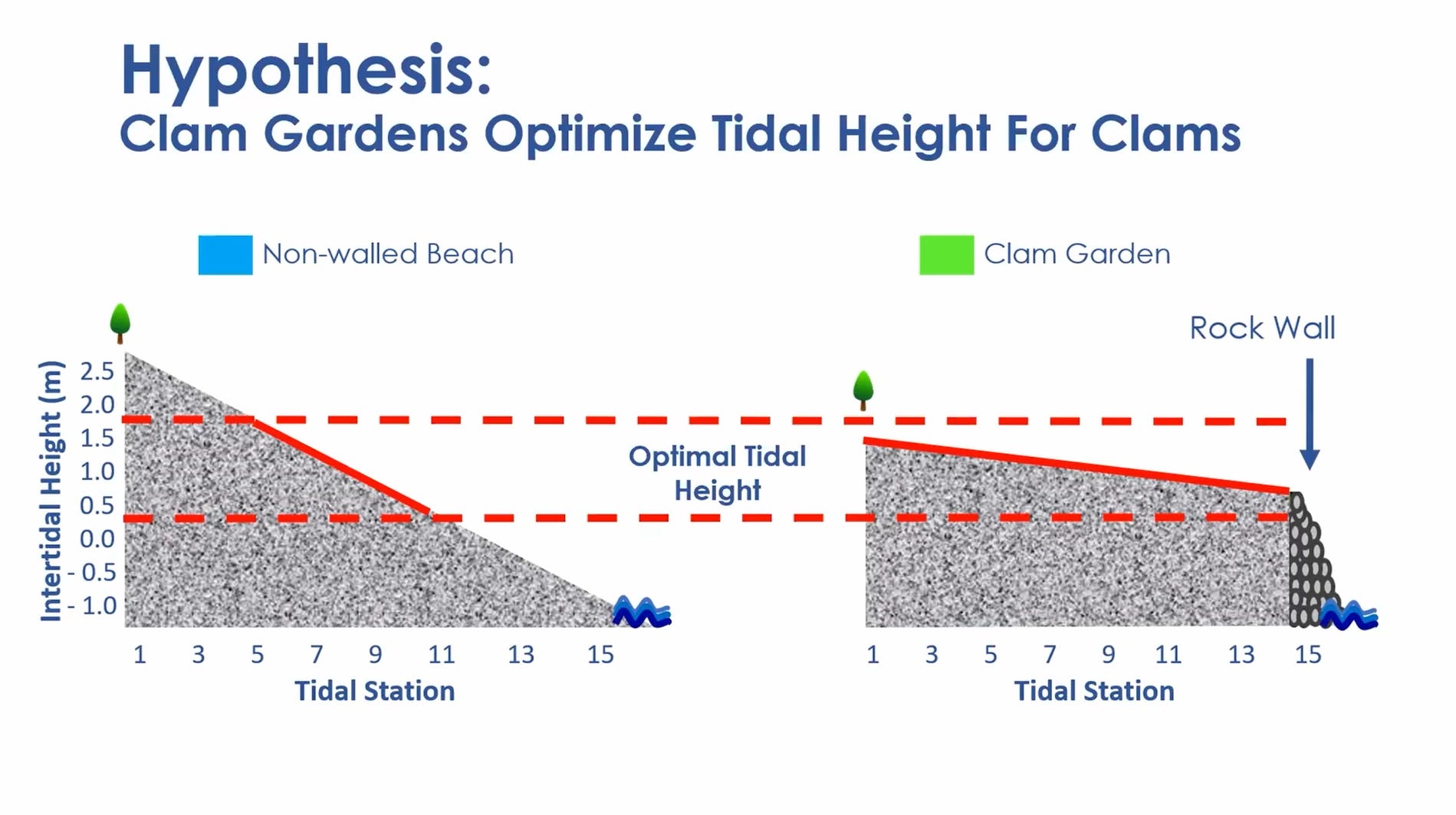
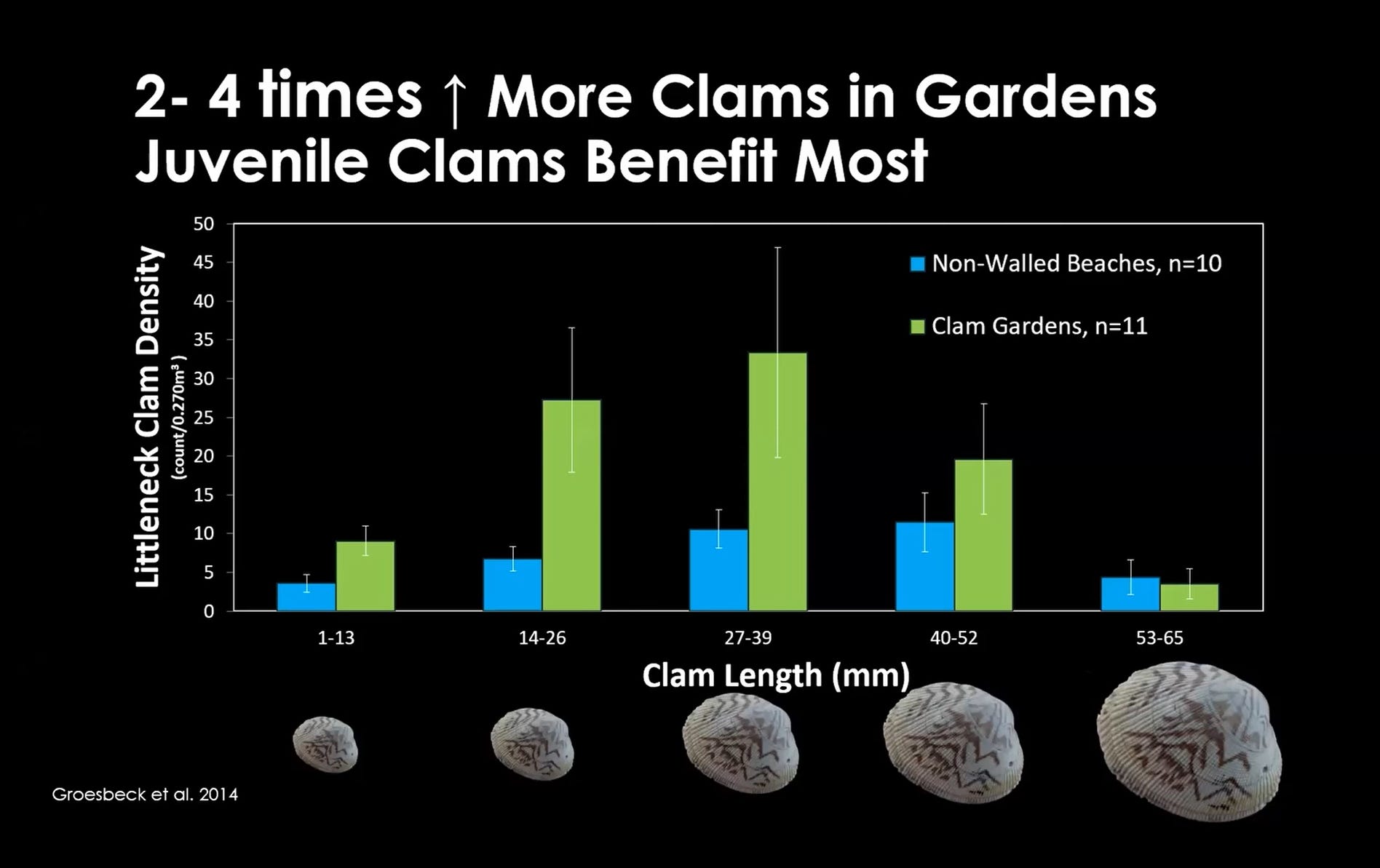
Emily had completed her Master’s research with input from Ken. By installing tiny heat domes on both walled and unwalled beds, she demonstrated that clam gardens can help clams survive rising temperatures—showing how traditional practices can inform present-day climate adaptation.
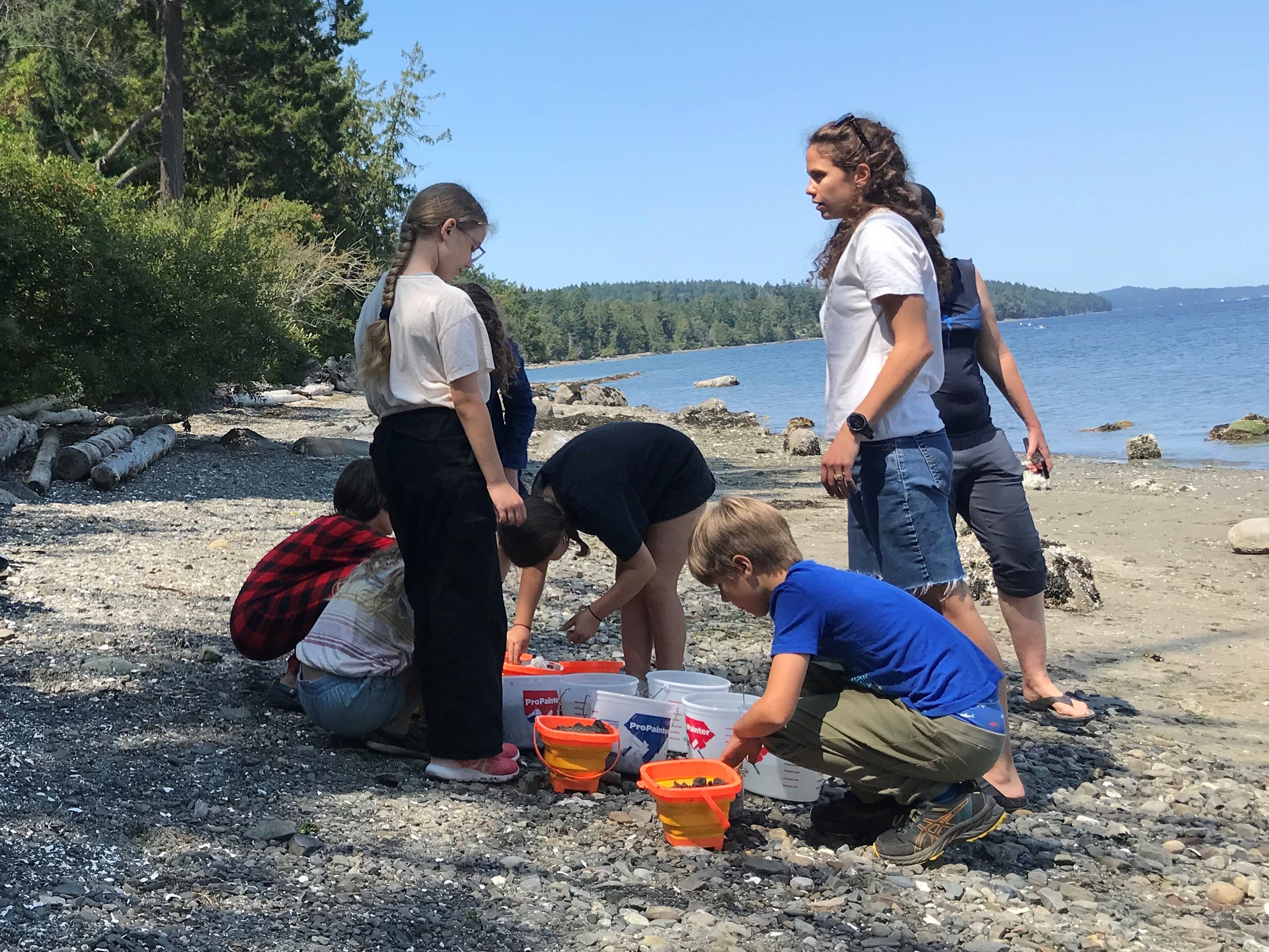
Students experimented with the porosity of different beach substrates, showing that crushed shells, which were eroding onto the beach from the ancient middens there, help clams respire and stay cool by letting in more oxygenated water and reflecting the sun. Without shell hash, clams can suffocate in warm, dense silt.
Serendipitously, Ken leads Fisheries, Wildlife and Natural Resources for the Spune’luxutth. I’d just been assigned to support Penelakut Elementary with outdoor learning through my day job, and he introduced me to their education team.
Other days, students and Indigenous Ed staff gathered around the fire, listening to Elders’ stories as the ferry wake pounded the wall. The breakwater held, and the clam garden stayed calm.
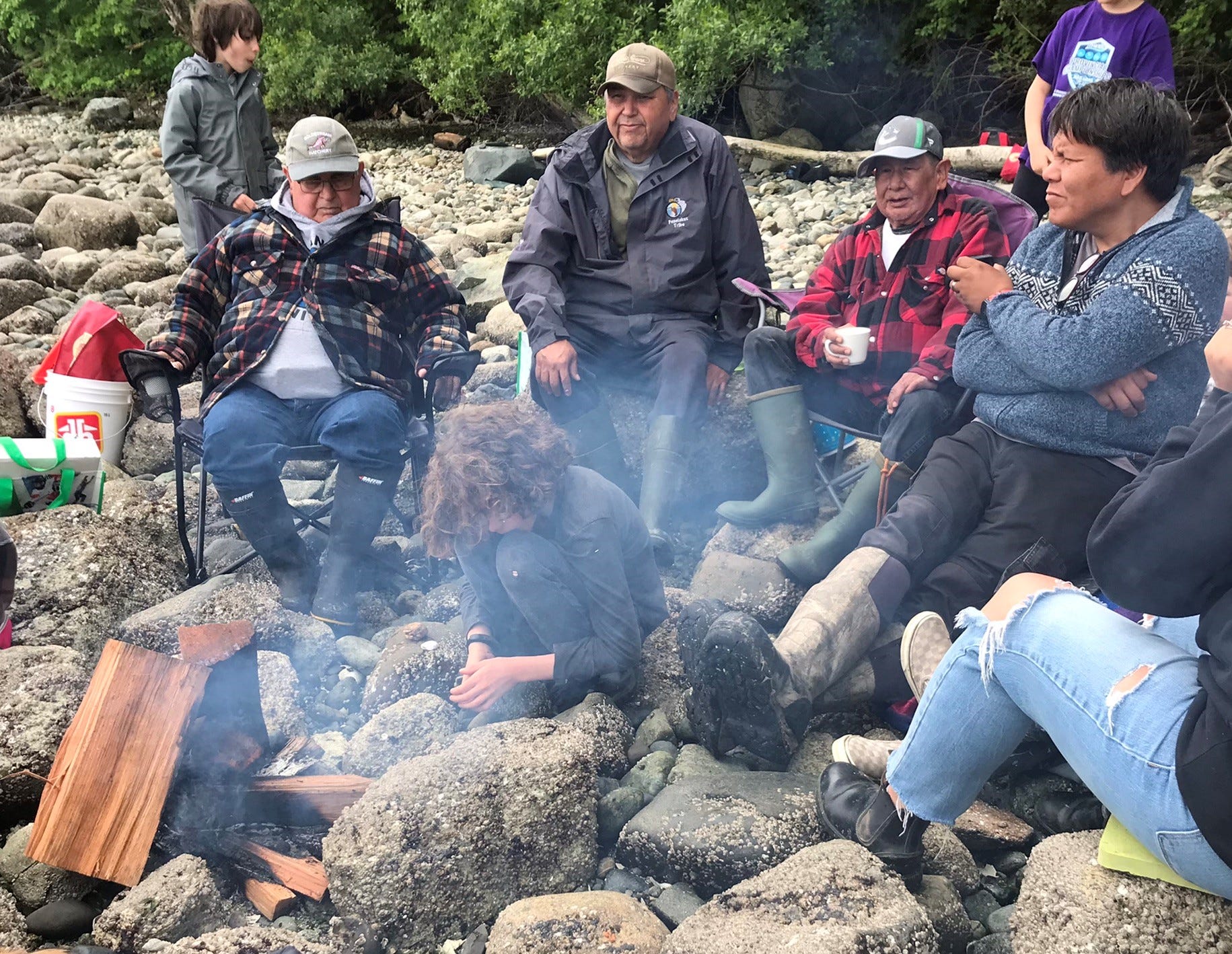


On National Indigenous Peoples Day 2024, about twenty Salt Springers came out to learn more about sea gardens. My new boyfriend came, too, and it felt like the world was my oyster.


Robert Sampson had just returned from Sitka, Alaska, where he and others shared restoration practices with the Tlingit. He handed me a baggie of smoked, spiced butter clams. “Indian popcorn,” he said with a grin, but much more rich and chewey.
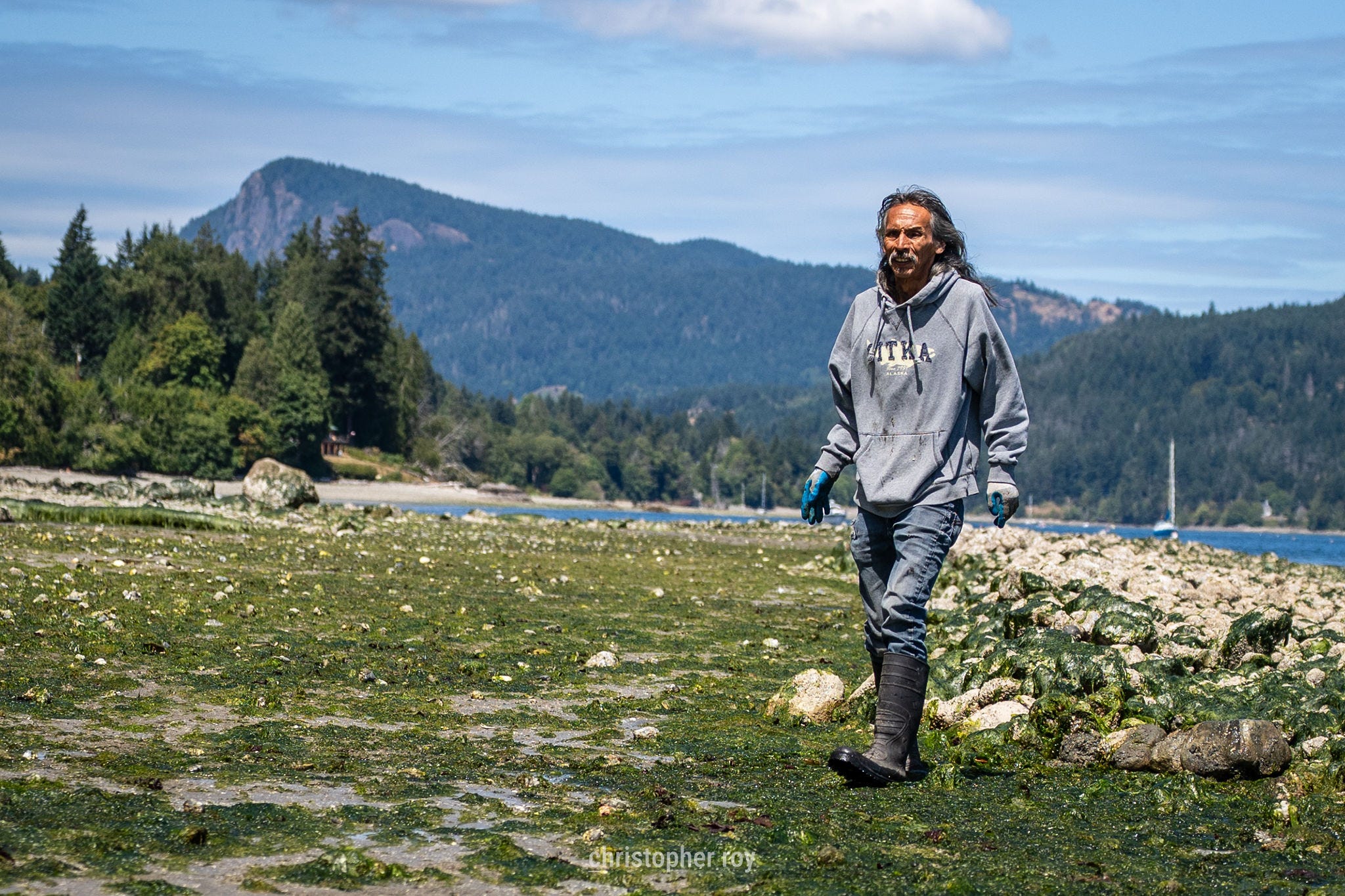
Ken Thomas demonstrated how cultivation—raking, aerating, removing seaweed—keeps clam beds productive.
That day, Parks Canada’s Erin Slade collected clam samples for genetic testing. Coast Salish Nations are exploring seeding beaches with well-adapted baby clams to accelerate recovery.
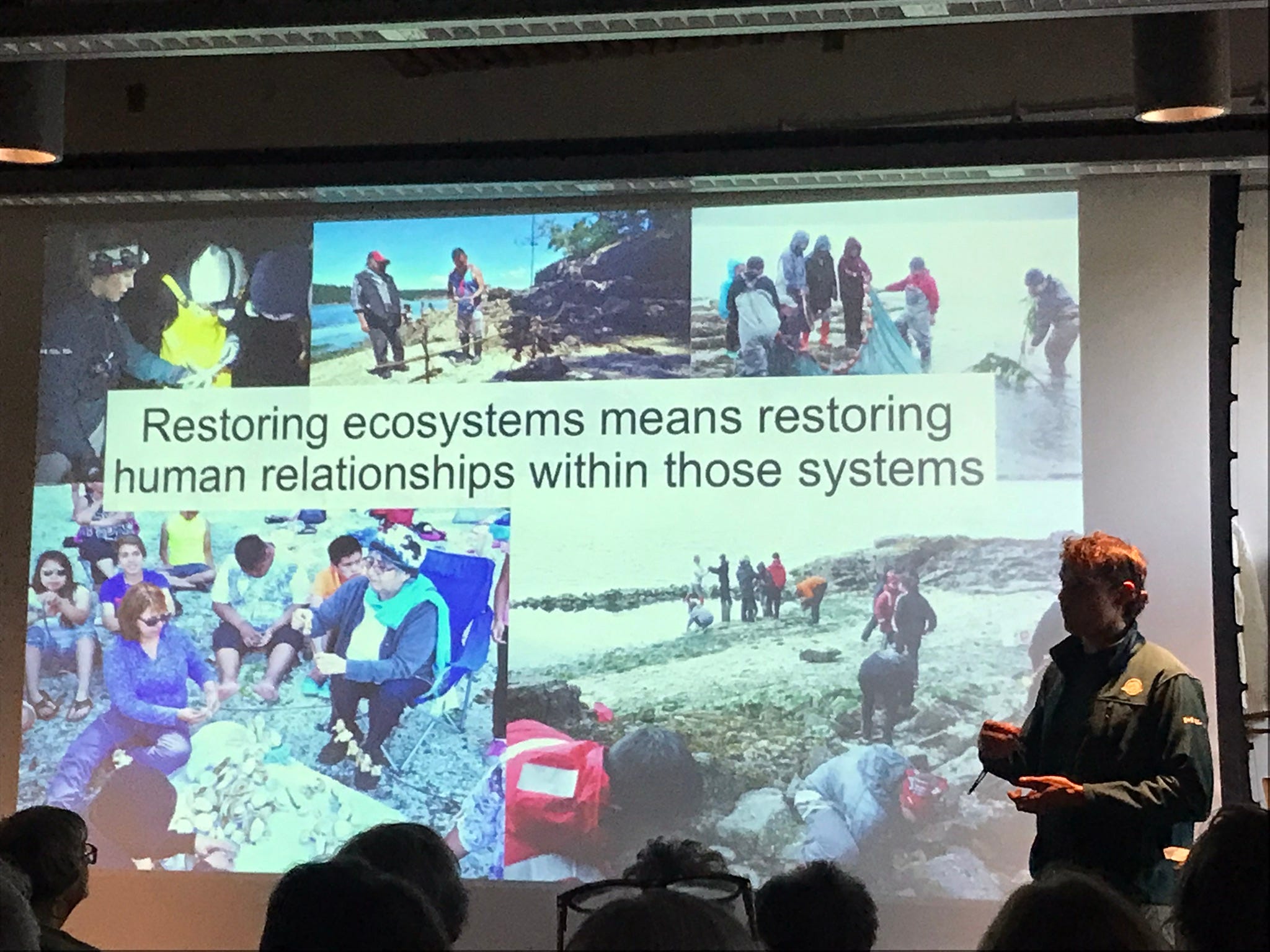
Last week, ZȺWIZUT and Erich joined us for dinner before presenting to a packed library crowd. ZȺWIZUT spoke of how runoff and upstream land use affect the health of these beaches.
“It’s not just for Indigenous people,” he said, “These gardens will feed all of us. We’ve got to keep them clean.”
Now it’s July. The month lacks an “R,” so we usually don’t harvest shellfish—but we can tend. I joined W̱SÁNEĆ youth and Salt Springers to maintain the wall, one rock at a time. Elders guided us to wedge each stone with care, so that tides and ferry wakes wouldn’t dislodge them.
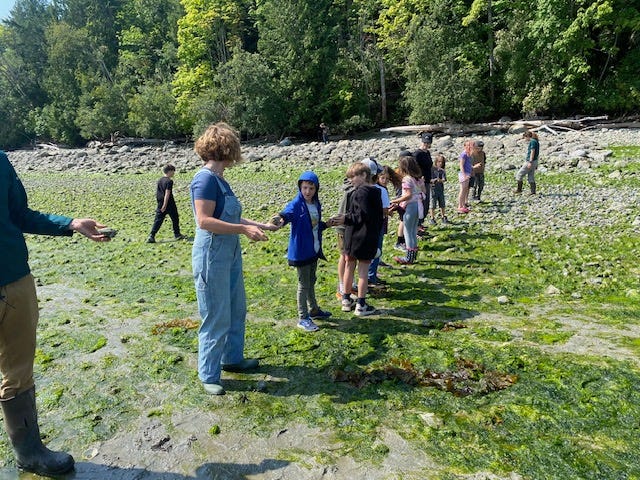
We found that by working together, we could carry larger rocks to the wall and make it even more sturdy. How many others had cooperated like this over the eons?


“These rocks have been touched by countless ancestors,” said ZȺWIZUT. “You’re part of that tradition now.”
I’ve learned that clam gardens aren’t relics; They’re living systems—culturally rooted, climate-resilient, community-powered. Nature is resilient. As the beds are tended, the clams return, offering food and an inclusive sense of continuity.
Over the past three years, I’ve changed too—lifted by experiences of care and renewal. These sea gardens reminded me that humans can play a positive role in nature’s recovery through respectful relationships and collaboration—and in doing so, begin to heal ourselves.
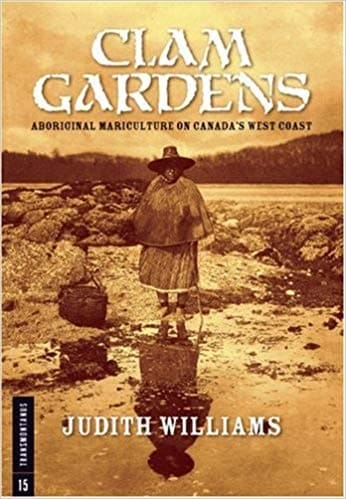
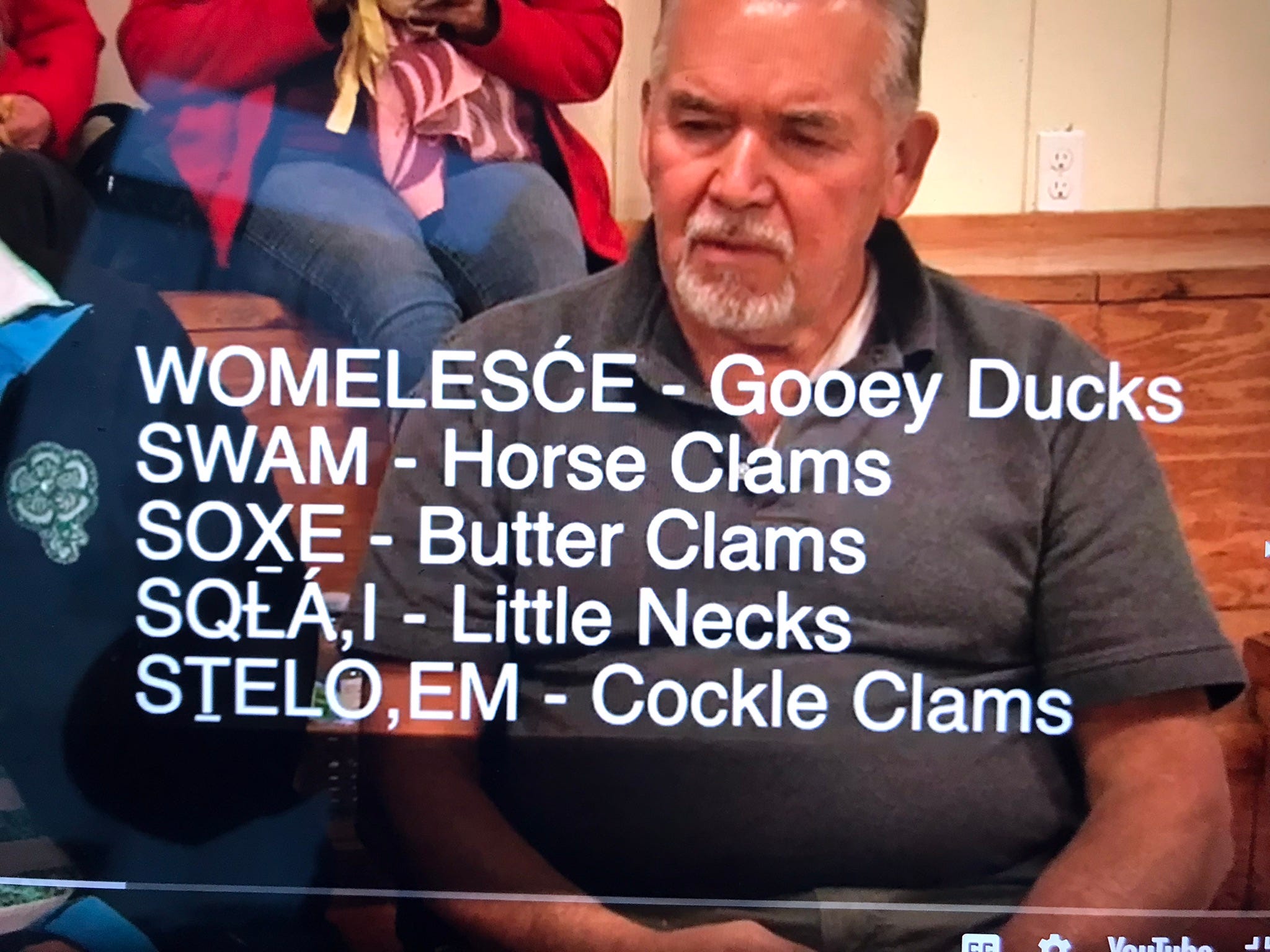
There’s so much more to learn—for more information:
WSANEC Leadership Council Clam Garden Restoration Project & Clam Gardens
Water Quality testing for Sea Garden Health in Fulford Harbour.
If You Want to Visit a Sea Garden, book by Ray Henry Vickers
Biohabitats Article about Clam Gardens
Big thanks to ZȺWIZUT / Carl Olsen for the inspiration and commitment to share this knowledge to help us all with greater ocean health and food security for the future!
These field trips were made possible by the generosity of time from Indigenous Knowledge Carriers (ZȺWIZUT/Carl Olsen, Tom Smith, Ken Thomas, Robert and Mark Sampson, Charlene George, and others), instructors (Alison Bain, Jackie Borosa), SD64 Staff, school families, volunteers (Jordan Pastor, Renee Jenkinson, Ryan Dentry, and others), the HCTF Wild Schools Program, SD64 Indigenous Education (Shannon Johnston, Quentin Harris, Lorna Fraser, Amanda Poitras), Parks Canada (GINPR, Erich Kelch, Erin Slade, Emily Shaver, Alice Meyer, and others), SSI Indigenous Peoples Weekend (Jon Cooksey & Pam Tarr), Nature Salt Spring (David Denning and Kathleen Maser), and the SSI Foundation Indigenous Priorities Fund, and so many more — please let me know whom I’ve left out!
Great post! On a sailing trip in June we saw bays lined with clam gardens on Quadra.
Great piece, Robin! So many themes there relevant to the global biodiversity assessments I get involved with, but brought to life through your personal experience and inspiring storytelling.