

This summer, we time-traveled a century into the future, to a future where we got it right, across five Northern Gulf Islands.
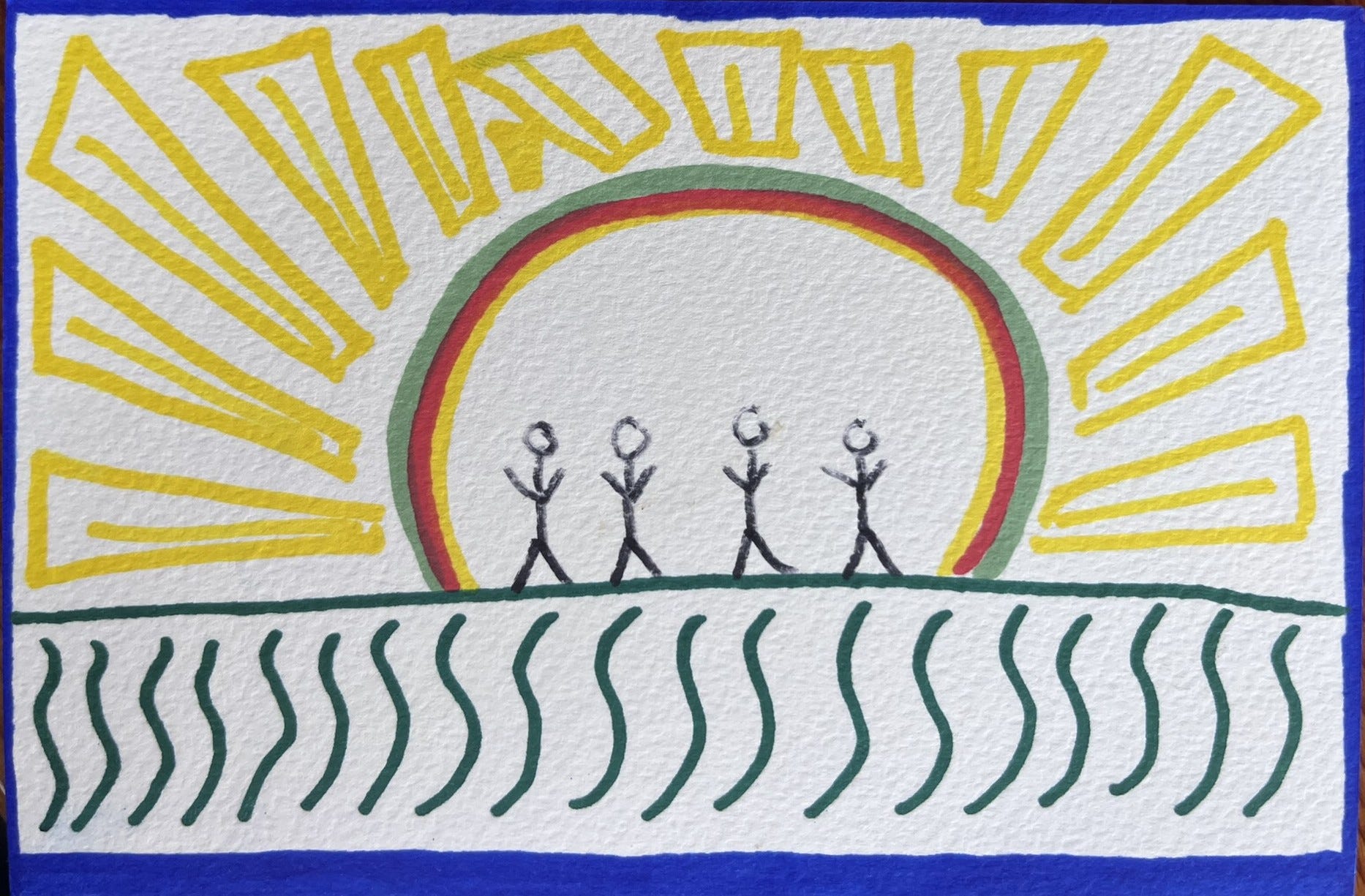
Alongside the Aqua Chautauqua Circus on their “Salish Sea Watershed; 100 Years from Now” journey of education, service, potlucks, and entertainment, we invited people to imaginate the future and send something back.
Inspired by Rob Hopkins’ How to Fall in Love with the Future and Ayana Elizabeth Johnson’s What if We Get it Right?, we breathed deeply, anchored ourselves to the Earth’s core, time and place, then reached out to the Universe of stars and beyond!
The table we were all holding began to shake and I talked us forward decade by decade, through wormholes, with gravitrons bending time and whipping around the sun at warp speed!
Whumpf, we arrived in 2126. Our eyes still shut, we silently explored a future where we “got it right”. After we returned to the present, we drew and wrote impressions on postcards from the future. Fifty-four postcards returned home with me.
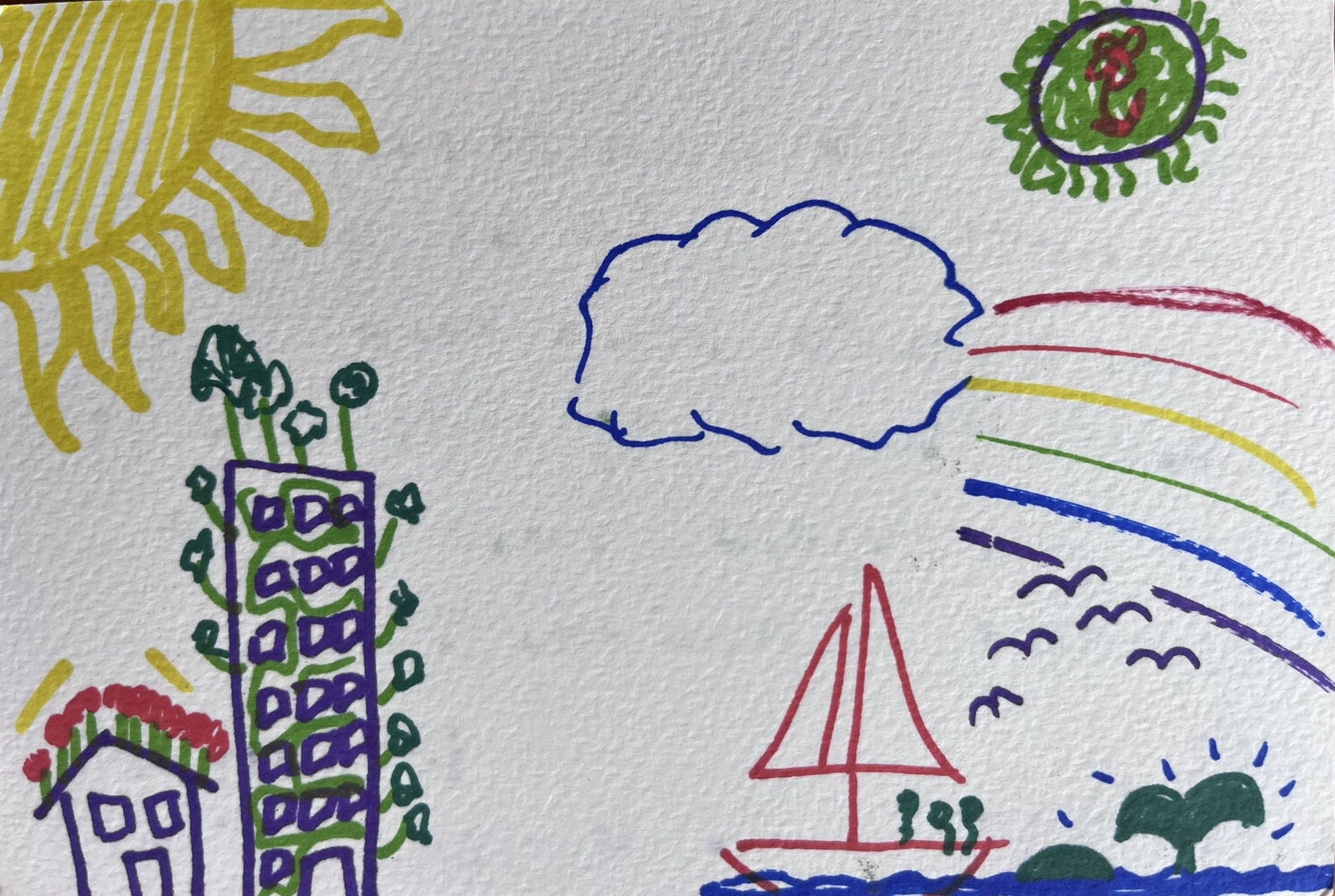
One hundred years from now, salmon and whales thrive. Clean energy. Music. Children and ancestors are honoured. Enjoyment is wealth.
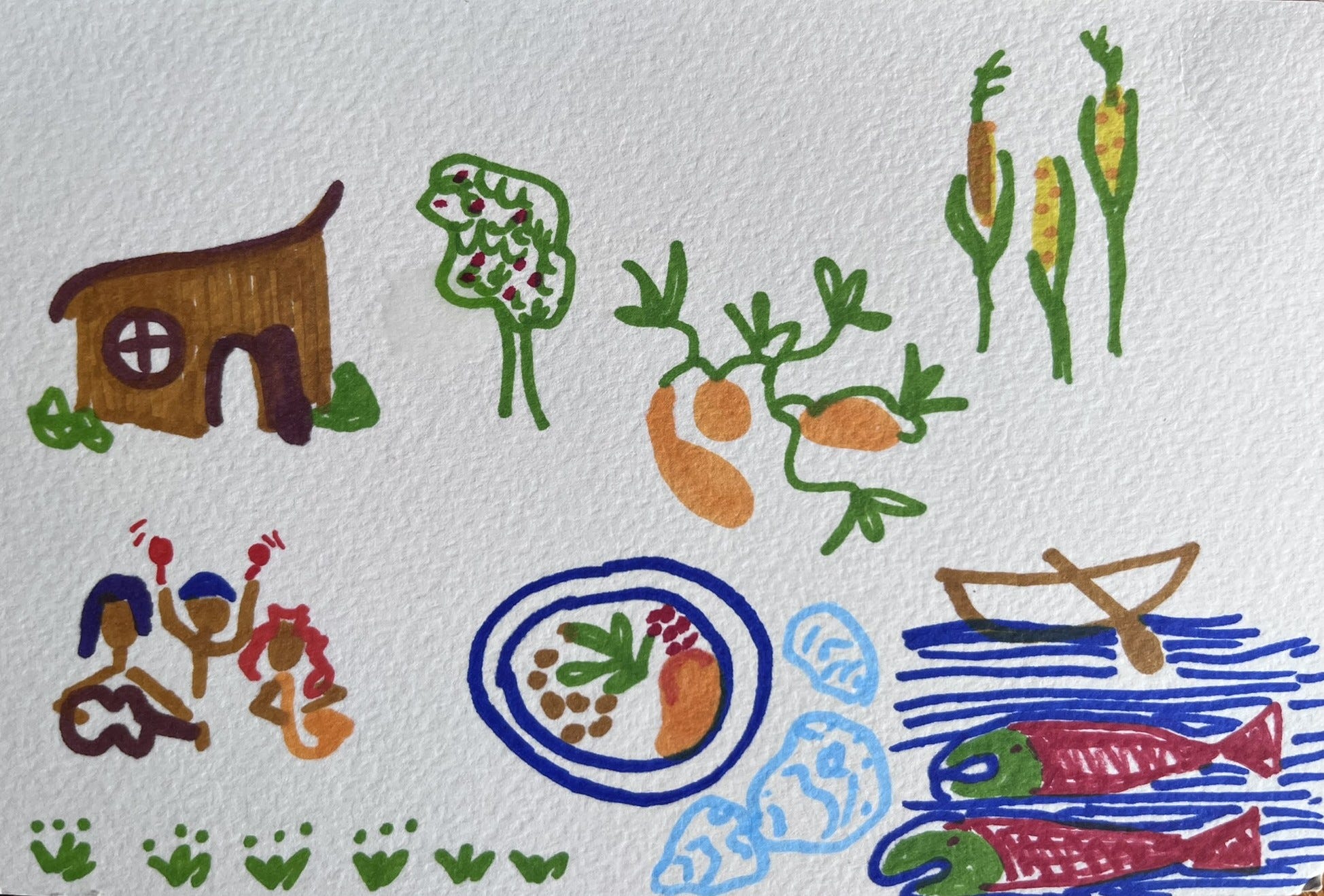
Artificial intelligence instantly translates between species. We use sound machines to regulate our emotions. Others imagined much less technology.
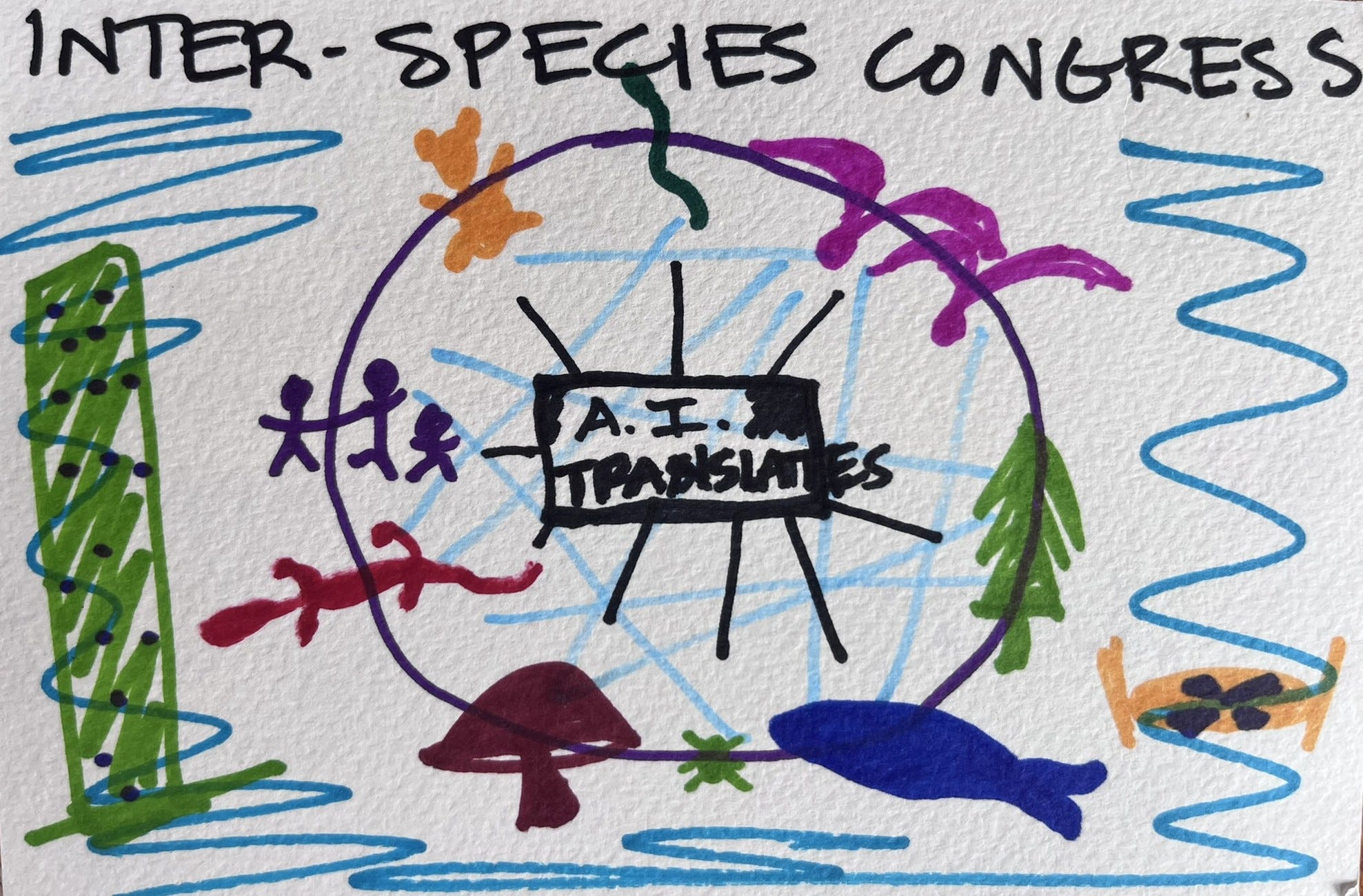
We establish Inter-Species Councils. We abolish poverty. We ride bicycles and fly with solar wings. We grow A LOT of food. We make art.
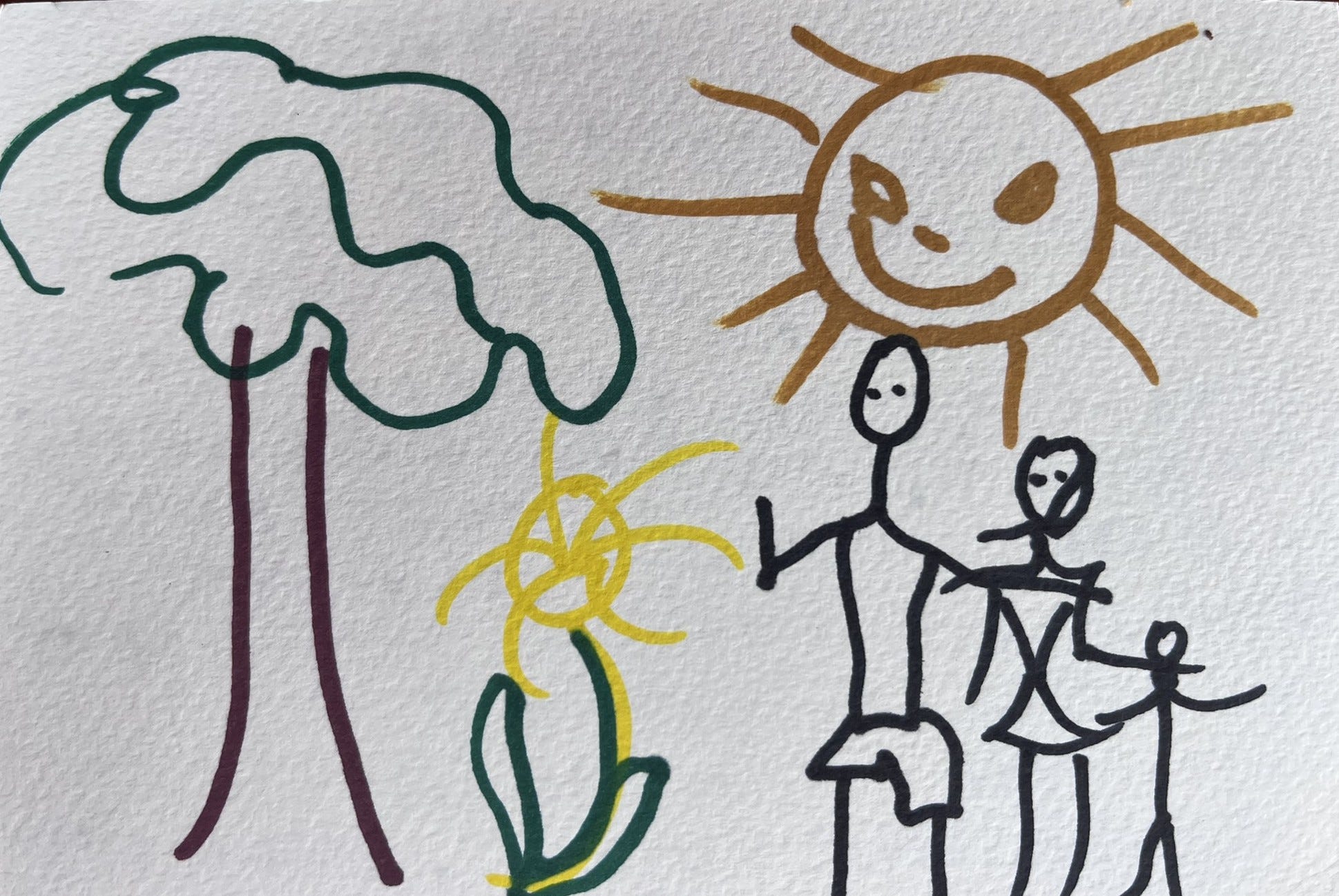
One wrote simply, “EGO DIED.”
Most people went to the same place: restored ecosystems; simpler, abundant lives; loving, generous communities; more-than-human kinship; clean/appropriate technology; intergenerational responsibility; joy.
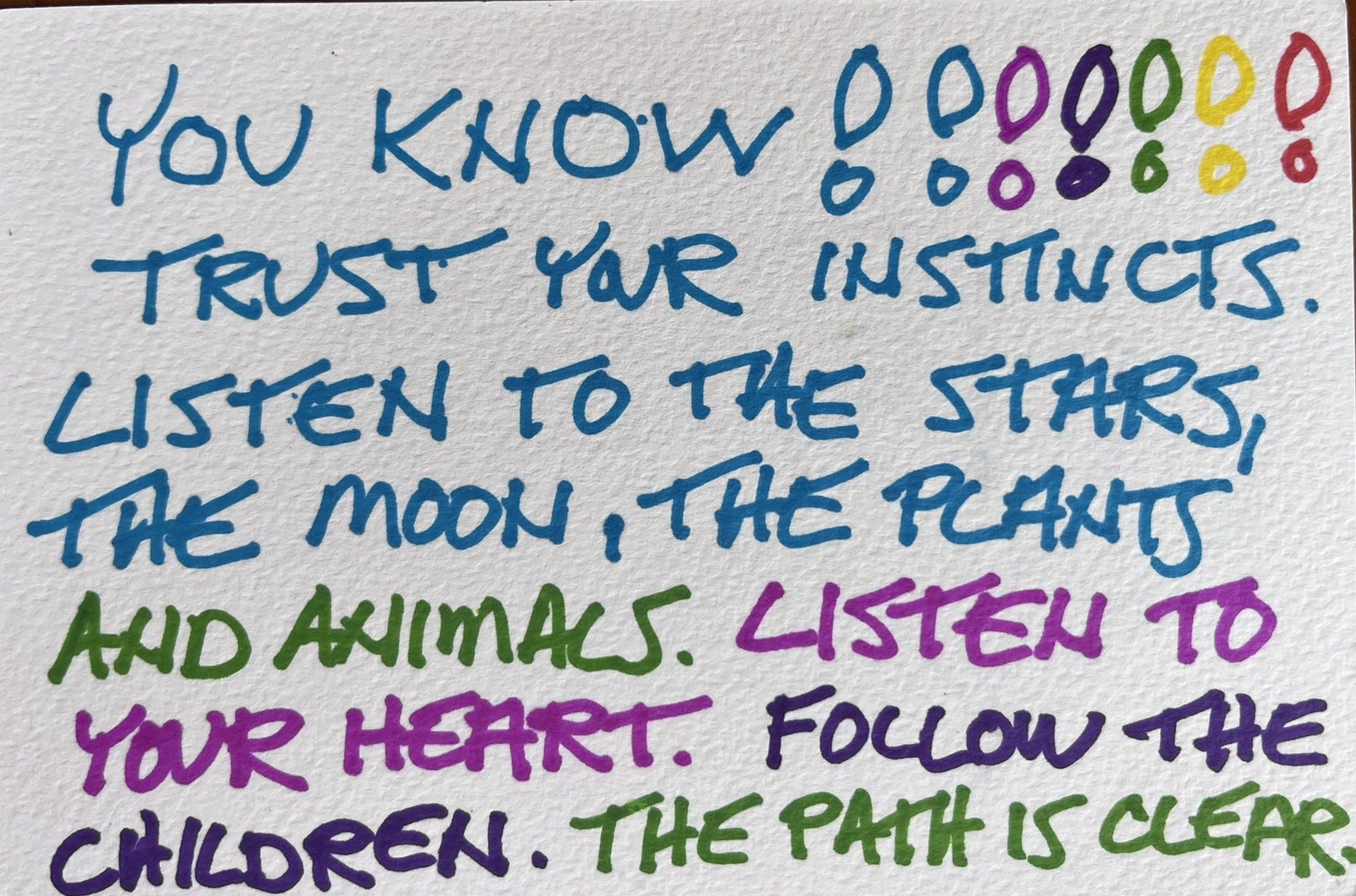
From the future, people thanked their ancestors for creating such a loving and healthy world.
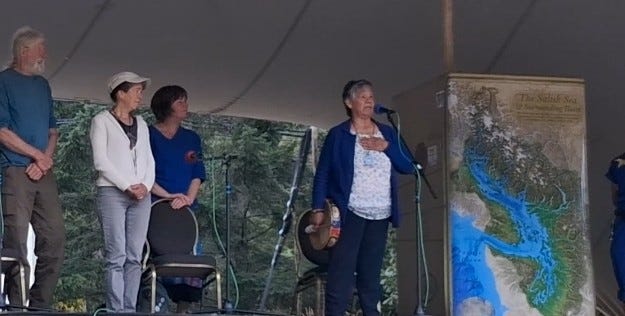
This time-travelling experiment culminated in a stewardship gathering on Gabriola Island, where we asked four esteemed panelists: What is your ideal vision for the Salish Sea Watershed 100 years from now, and what will it take to get it right?
The future they described sounded remarkably familiar.
First, Indigenous Knowledge Keeper for the Snuneymuxw, C’tasi:a / Geraldine Manson traveled backwards through generations, telling a story about Elders protecting sacred land and receiving teachings through dreams. She described knowledge passing continuously from Elders to younger generations, and the responsibility to bring youth onto the land and water so they can continue that relationship.
Secondly, Elected Islands Trustee, Susan Yates’ vision was an archipelago where cultural and ecological systems work together; First Nations Knowledge Keepers and teachers are central; humans understand that they are not above the air, wetlands, forests and marine ecosystems; and protected areas form a lasting network across the Salish Sea. Her beautiful sequence was: “First, we learn, then we care. Then we work together.”
Then, MLA Sheila Malcolmson’s 2126 featured massive salmon returns, more herring, strong forests, more locally grown food, a more diverse community, affordable housing, community transportation and a strong preventative healthcare system. And crucially, she didn’t imagine government accomplishing it alone. She pointed repeatedly to community initiatives that governments subsequently supported: “Sometimes we do the right things in partnership,” she said.
Lastly, Michael Mascall of the Quadra Island Conservancy’s envisioned a simpler, back-to-the-land future: growing food locally, caring for local water, logging only the timber that communities need rather than exporting it, and that these islands would become examples of how people might live sustainably, informed by First Nations knowledge, within these ecosystems.
What if these Salish Sea Islands ARE experiments in futuration? There’s so much possibility here: communities working hand-in-hand with Indigenous partners; families sharing organic produce; stewardship of clam gardens, herring, whales; walking and cycling pathways expanding; creativity and so much more.
Like one postcard said, “Gabriola was one of the places 100 years ago that got it right.” Let’s begin today.
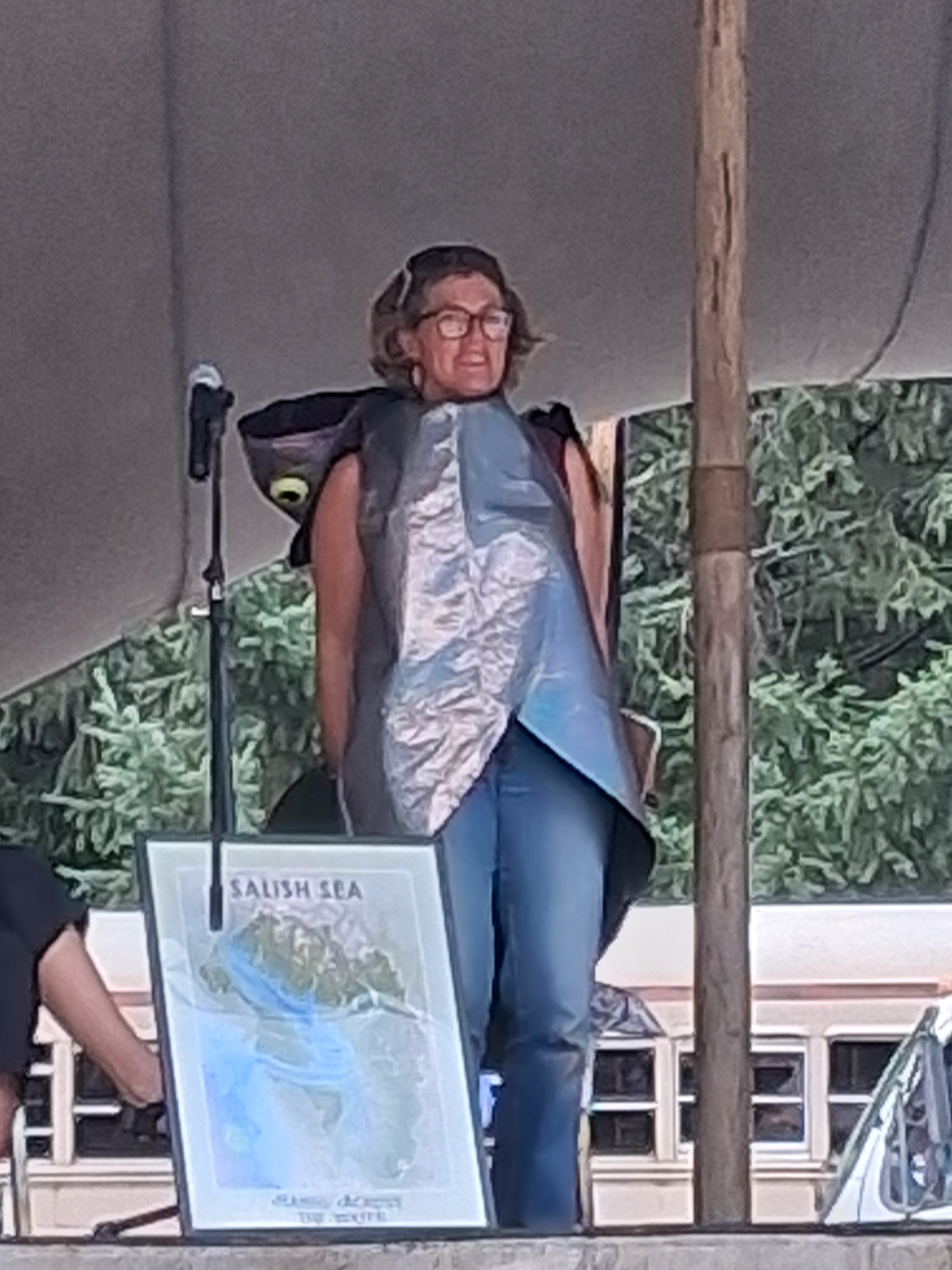
Big thanks to Paul Magid, Cindy Elliser, and Ross Newport for their collaboration on this idea!
I hope you make this an annual event! And let us know.